


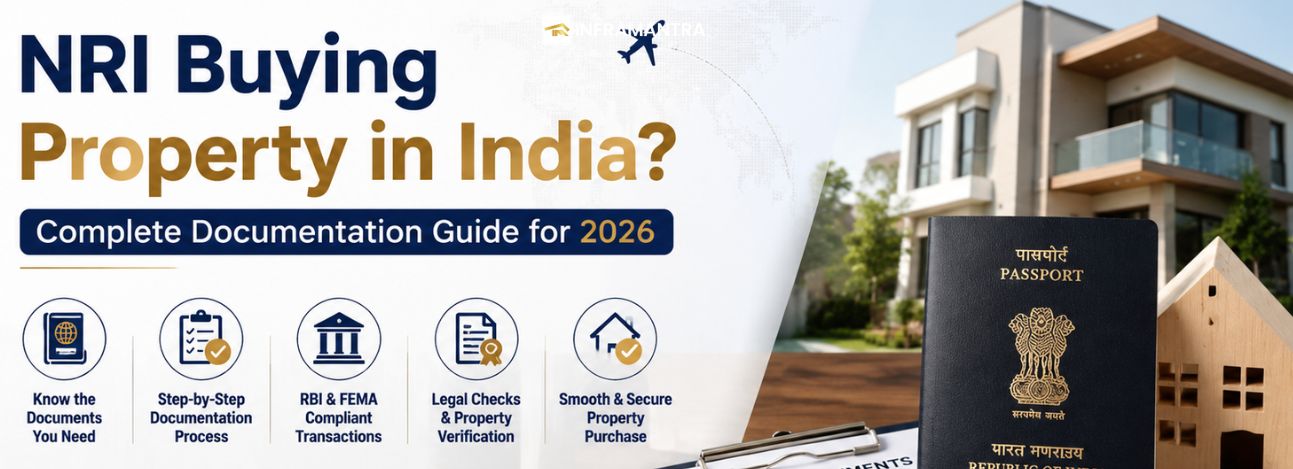
India continues to be one of the most attractive real estate markets for overseas Indians. From luxury apartments in metropolitan cities to long-term investment opportunities in emerging markets, many NRIs are actively investing in Indian property in 2026. However, before purchasing residential or commercial property, understanding the documentation process is crucial.
This guide covers the complete list of documents required for NRI to buy property in India, along with legal requirements, FEMA rules, and property registration essentials.
Understanding NRI, PIO, and OCI: What’s the Difference?
Before starting the property buying process, it is important to understand these categories:
- NRI (Non-Resident Indian): An Indian citizen residing outside India for employment, business, or any purpose indicating an indefinite stay abroad.
- PIO (Person of Indian Origin): A foreign citizen with Indian ancestry. The PIO card scheme has now been merged with OCI.
- OCI (Overseas Citizen of India): A foreign national of Indian origin who is granted lifelong visa and multiple-entry benefits to India.
Under FEMA regulations, both NRIs and OCIs can purchase residential and commercial property in India without prior RBI approval. However, they cannot directly purchase agricultural land, plantation property, or farmhouses.
Core Documents Required for NRI Property Purchase in India
Here is the complete NRI property document checklist for 2026:
1. Valid Passport
A valid Indian passport is the primary identity proof for NRIs. OCI cardholders must provide their foreign passport along with OCI documentation.
The passport should contain:
- Personal details page
- Visa or residency permit
- Immigration status
2. PAN Card
A PAN card is mandatory for property transactions in India, especially for:
- Property registration
- TDS compliance
- Home loan approval
- Tax filing
Without PAN, higher TDS deductions may apply during property transactions.
3. OCI or PIO Card (If Applicable)
OCI cardholders purchasing property in India must provide:
- OCI card copy
- Foreign passport
- Overseas residential proof
This helps establish eligibility under FEMA guidelines.
4. Overseas Address Proof
NRIs must submit proof of overseas residence, such as:
- Utility bills
- Driving license
- Bank statements
- Residence permit
Most builders and banks require these documents to be notarized or attested by the Indian Embassy.
5. Passport-Size Photographs
Recent passport-size photographs are required during:
- Property registration
- Loan processing
- KYC verification
6. NRE/NRO Bank Account Details
Property payments by NRIs must usually be made through:
- NRE Account
- NRO Account
- FCNR Account
Banks may ask for:
- Last 6 months’ bank statements
- Source of funds
- Foreign remittance proof
Cash transactions for property purchase- Not permitted for NRIs
7. Income Proof
If applying for an NRI home loan, lenders may require:
- Salary slips
- Employment contract
- Foreign tax returns
- Bank statements
- Credit reports
This helps banks assess repayment capacity.
8. Power of Attorney (POA)
If the NRI cannot be physically present in India during registration, a Power of Attorney can authorize a trusted individual to complete the transaction.
The POA should be:
- Properly drafted
- Notarized abroad
- Attested by the Indian Embassy or Consulate
A Special Power of Attorney (SPA) is generally preferred for property transactions.
Important Documents NRIs Should Check and Verify Before Property Purchase
Along with the personal documents, you (NRIs) should also verify the below mentioned property documents carefully:
- RERA registration
- Occupancy certificate
- Sale agreement
- Title deed
- Encumbrance certificate
- Approved building plan
- Property tax receipts
Note: In case, you are buying property in India for the first time, do consider taking help from a professional property lawyer to verify the documents.
FEMA Rules for NRI Property Purchase in India
These are the FEMA regulations that every NRI has to follow while buying a property in India:
- NRIs and OCIs can buy unlimited residential and commercial properties in India.
- RBI approval is generally not required.
- Agricultural land and farmhouses are restricted.
- Payments must be routed through approved banking channels.
Common Mistakes NRIs Should Avoid
Avoid These Errors
- Buying property without title verification
- Using unregistered POA documents
- Ignoring RERA compliance
- Not maintaining proper banking records
- Delaying PAN documentation
These mistakes can lead to legal disputes and taxation issues later.
Best Properties · Best Deals
Conclusion
Buying property in India as an NRI in 2026 is easier than ever, provided the documentation is complete and legally compliant. From PAN card and passport verification to FEMA regulations and property due diligence, every document plays a critical role in ensuring a smooth transaction. Before finalizing any deal, consult a qualified real estate lawyer and tax advisor to avoid legal or financial complications. A properly planned NRI property investment can offer long-term wealth creation, rental income, and emotional connection to India.
Inframantra- a preferred channel partner and trusted real estate consultancy firm, is going to organize a special event for NRIs, who wish to buy properties in Gurgaon, India- a fast-growing luxury residential property hub. This event is to be held in San Jose and Seattle, where team Inframantra will be showcasing some of the best properties in Gurgaon that are being developed by the top real estate developers in the city. In the event, you can avail virtual site visits of your preferred properties and enjoy seamless documentation at zero-cost. To know more about the event, please visit the Inframantra website and click on the USA EXPO tab on the top.
You may also like to read:-
NRI Real Estate Investment in India: Laws, Taxes, and Smart Strategies
Real Estate Trends in Gurgaon 2026: Growth and Future Insights

✍️ Written By: Alka